Regionalization Marks New Era for UMC
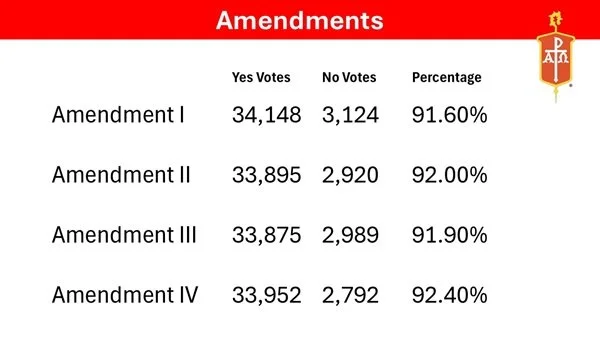
Amendments Vote Outcome (Graphic credit: UMC.org)
By Jan Nelson
The United Methodist Church has entered a historic new chapter with the completion of its regionalization process. This change, decades in the making, restructures the church into nine regional conferences, giving each authority to adapt policies and practices to their local context. WMJM played a significant role in supporting this transformation, both in advocacy and in fostering relationships across the global church.
With the Council of Bishops’ announcement on November 5, the legislative process of regionalization was completed. Constitutional amendments passed overwhelmingly at the 2024 General Conference and were ratified by over 90% of annual conference members worldwide. The amendments took effect immediately, establishing the U.S. church as one of nine regional conferences. Each regional conference now has equal authority to modify certain parts of the Book of Discipline and set policies tailored to the ministry needs of its own area. While many details remain to be worked out and unforeseen challenges may arise, this represents a meaningful shift from the historically U.S.-centric structure of the denomination.
The overwhelming vote after 20 years reflected growing recognition that the UMC’s structure needed major reform. Regionalization is not a new idea. The inadequacy of the structure had become increasingly clear for at least a generation, but institutional inertia made change difficult. The turmoil following the 2019 General Conference and moves toward separation and disaffiliation made clear that the existence of the UMC was threatened without drastic change. External proposals, including the Christmas Covenant, combined with work from other groups, created the foundation for the new structure of the denomination. WMJM believes that trust intentionally built through relationships across diverse United Methodists worldwide was a decisive factor in achieving this milestone.
WMJM has been concerned and actively supported a more just and equitable structure for the church since its formation. Real activity began in 2018, when the organization partnered with the Oregon-Idaho Conference to hold an international event called “Listening with Open Hearts.” Participants from the U.S. focused on listening more than speaking, learning about successes, challenges, and concerns from Methodists in Africa, Europe, and the Philippines. Equally important were the relationships formed, which have continued to guide the denomination’s work. Many participants have since assumed leadership roles, including election as bishops, and many members of the Christmas Covenant team first met at this event.
Through prayers, encouragement, and financial support, WMJM enabled critical work for the denomination. Support included helping team members pay for gas to power generators and maintain internet access, funding the one in-person meeting of the Christmas Covenant team, and contributing to the Love Your Neighbor Coalition’s General Conference efforts, including hospitality for international delegates and translation services. WMJM also assisted local leaders in central conferences as they educated members about the amendments before annual conference sessions, an effort credited with contributing to the high ratification rate.
As followers of Jesus, WMJM cares deeply about justice, though the path toward it varies across cultures and regions. Challenges and obstacles are inevitable, and the U.S. church does not have all the answers, nor is it expected to. There is much to learn from how the church has grown and adapted in other parts of the world, lessons that can strengthen the UMC’s global impact. Advances in technology and communication offer new opportunities to build connections and deepen understanding, allowing church members to listen with humility to experiences different from their own. By embracing these lessons, the UMC can not only transform itself but also contribute meaningfully to broader efforts for justice and equity.
The WMJM leadership team thanks all the members who have made this possible through gifts and volunteer time.
